Going at Your Own Pace in Counselling: What That Actually Means
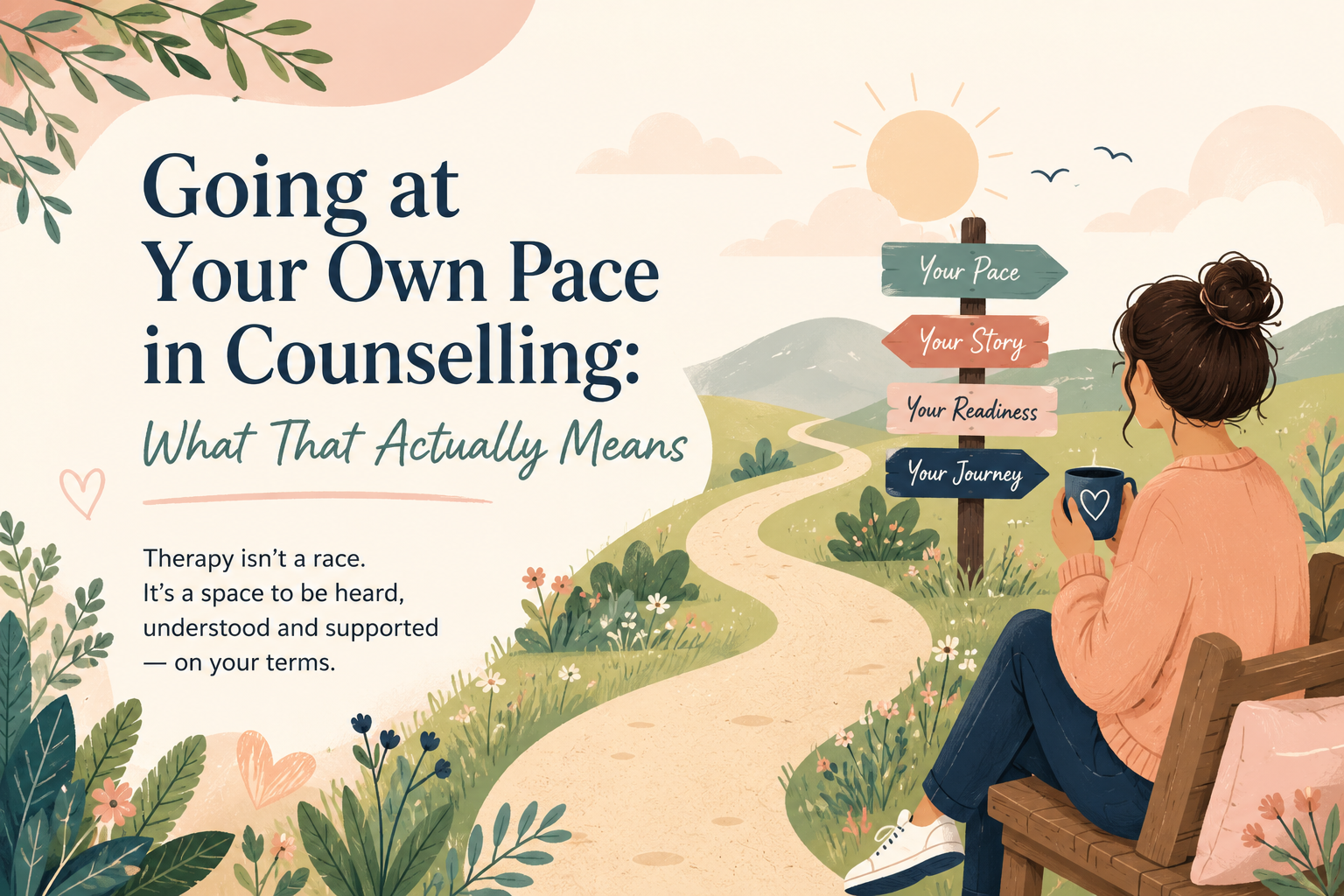
One of the things I often say to clients is that we'll go at your pace.
For many people, those words bring a sense of relief. But they can also leave people wondering what that actually means.
Does it mean avoiding difficult conversations?
Does it mean talking about whatever feels easiest?
Or does it simply mean taking things slowly?
The answer is a little more nuanced than that.
Many people come to counselling worried they'll say the wrong thing, that they'll be expected to share everything immediately, or that they need to make progress quickly. In reality, counselling isn't about getting it "right" it's about creating a space where you can begin wherever you are.
Therapy Isn't a Race
There isn't a timeline you have to follow in counselling.
You don't need to walk into your first session ready to share your deepest thoughts, painful memories or your life story.
For many people, simply walking through the door or joining an online session is already a huge step.
Building trust takes time, and that's okay.
Just as you wouldn't expect to immediately trust someone you've only just met, it can take time to feel safe enough to talk about the things that matter most.
Going at Your Own Pace Doesn't Mean Avoiding Difficult Feelings
Sometimes people worry that "going at your own pace" means never talking about the difficult things.
That's not what it means.
There may be times when we gently explore topics that feel uncomfortable or emotional. Growth often happens when we feel safe enough to gently explore the things we've been avoiding.
The difference is that we'll do it together, at a pace that feels manageable rather than overwhelming.
Counselling isn't about pushing you beyond what you're ready for. It's about creating enough safety that difficult conversations become possible.
You Don't Have to Tell Me Everything Straight Away
One of the biggest worries I hear is:
"What if I'm not ready to talk about that?"
The simple answer is, you don't have to.
Some people spend their first session talking about what's happening in their life now.
Others talk about work, relationships or the week they've had.
Some cry.
Some don't.
Some aren't even sure why they've come; they just know something doesn't feel quite right.
All of those experiences are completely okay.
Sometimes people worry that they won't know what to say, or that silence means they're "doing therapy wrong." Silence can be just as valuable as conversation. It often gives us space to reflect, notice what's coming up, or simply sit with thoughts and feelings that are difficult to put into words. There is no pressure to fill every moment.
Sometimes Going Slowly Is Actually Progress
It can be tempting to think that progress in therapy means having big breakthroughs every week.
In reality, progress often looks much quieter than that.
It might be:
Feeling a little more comfortable each session.
Finding the words for something you've never been able to describe before.
Beginning to notice patterns in your thoughts or behaviours.
Feeling understood for perhaps the first time.
Leaving a session feeling lighter, even if nothing dramatic happened.
These small moments often build into meaningful change over time.
Going at your own pace doesn't mean standing still. It means moving forward in a way that feels safe, manageable and meaningful to you.
Your Pace May Change
There may be weeks where you feel ready to explore something deeper.
Other weeks, life may simply feel overwhelming, and you need the session to be a place where you can pause, breathe and process what's happening right now.
Neither approach is better than the other.
Therapy isn't about getting through a checklist. It's about meeting yourself where you are.
What My Role Is
My role isn't to rush you, pressure you or decide what you should talk about.
It's to provide a safe, supportive and non-judgemental space where you can explore what's important to you.
I'll never force you to talk about something you're not ready for. Instead, I'll work with you, offering gentle curiosity, compassion and support as we explore whatever feels most important to you.
Sometimes I may gently ask questions or notice patterns that you haven't recognised yourself. Sometimes I may encourage you to stay with a feeling for a little longer if it feels helpful.
We'll work together.
The therapeutic relationship is collaborative, and we'll move at a pace that feels safe while still supporting growth.
A Thought to Leave You With
There is no "right" speed for healing.
Some conversations happen in the first session.
Others take weeks, months or even longer.
Neither is wrong.
Sometimes the bravest thing you can do isn't to tell your whole story all at once.
Sometimes it's simply showing up, exactly as you are.
If you've been thinking about counselling but have been worried that you'll be expected to open up before you're ready, I hope this reassures you that there is no pressure. We'll go at a pace that feels right for you, because building trust is just as important as the conversations themselves.
