Why Is It So Hard to Say No?
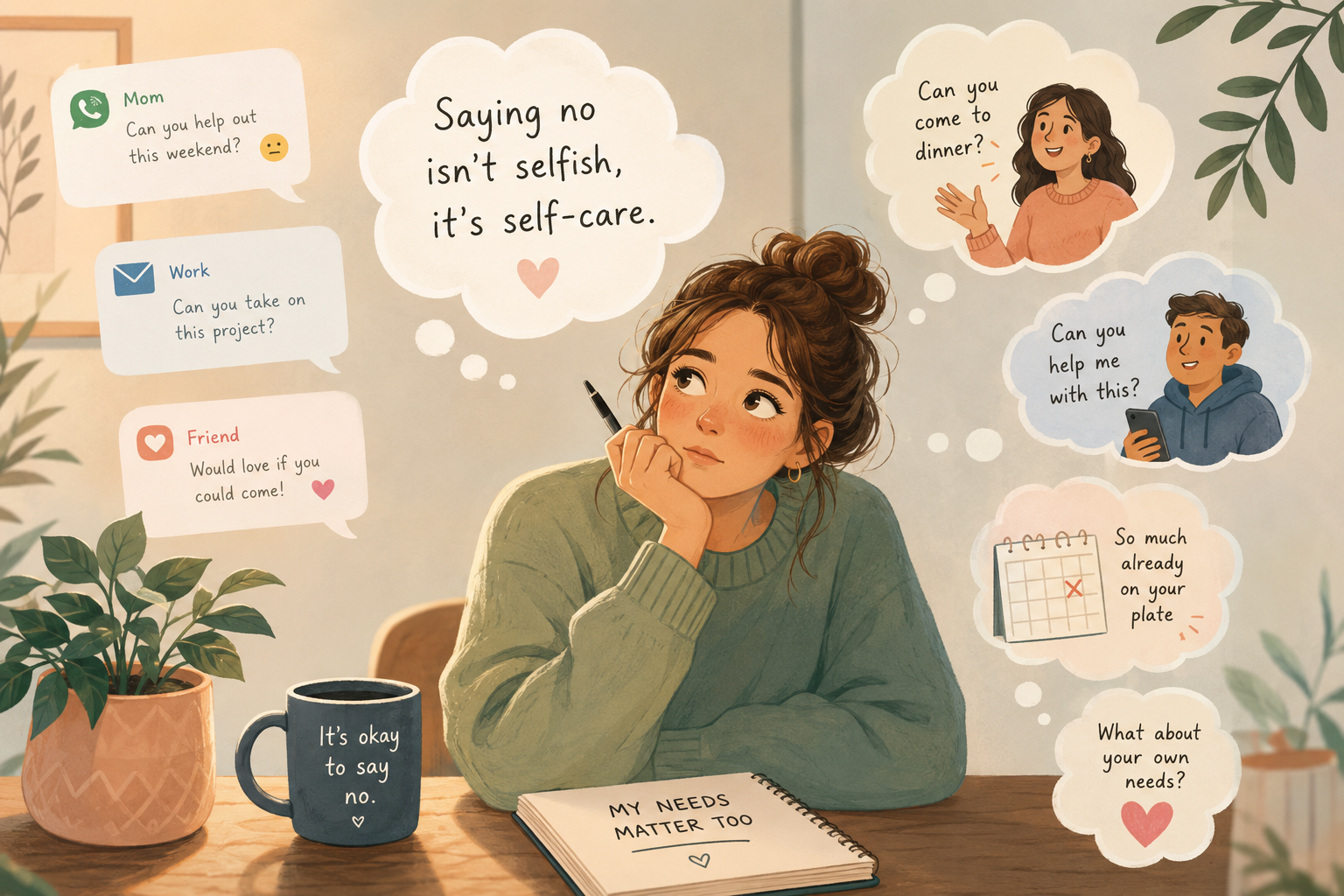
Why is it that saying no can be so difficult?
If you find it difficult to say no, often put other people's needs before your own, or recognise yourself in patterns of people-pleasing, you may recognise some of what follows.
You might be feeling overwhelmed, run down or tired. Perhaps you simply don't want to do something, yet for some reason saying no feels incredibly difficult.
Saying no isn't always just about declining an invitation or setting a boundary. It can bring up feelings of guilt, anxiety or fear. You might worry about letting someone down or disappointing them. Sometimes it feels easier and more comfortable to say yes, even when it comes at the expense of your own peace, wellbeing or health.
If you've found yourself agreeing to things you don't really have the time or energy for, taking on more than feels manageable, or worrying about disappointing others, you're certainly not alone.
Sometimes we don't realise we've taken on too much until we're already in the middle of it. Other times, perhaps the person asking feels difficult to say no to, or they're particularly persuasive. Maybe you simply can't bear the thought of letting someone down.
Sound familiar?
If it does, you're certainly not alone. Most of us have said yes at some point when we really wanted, or needed, to say no. Where it can become a problem is when saying yes becomes our default. We begin giving our time, energy and attention to everyone else before we've given ourselves the rest, space or care we need. Sometimes we even neglect our own important responsibilities because we're so focused on meeting everyone else's needs.
There are many reasons why saying no can feel so difficult. Perhaps you've learned from an early age to put other people's needs before your own. Perhaps being helpful became one of the ways you felt accepted, valued or needed, or perhaps saying no once led to conflict, criticism or disappointment.
Whatever the reason, these patterns usually develop over time, they're not simply habits you've chosen. For some people, saying yes becomes part of a wider pattern of people-pleasing, where it feels safer to meet someone else's needs than risk disappointing them.
Over time, we can become so used to putting ourselves last that we stop noticing what we need altogether.
Saying yes may keep the peace in the moment, but it doesn't always bring you peace.
It can be helpful to pause and reflect on questions like these:
How would I feel if I said yes?
How would I feel if I said no?
Does saying yes truly reflect what I want or need?
What's the worst that might happen if I said no?
Where did I learn that saying no wasn't okay?
Does saying no make me feel selfish?
Am I worried people will think less of me?
Is being helpful part of how I've learned to feel valued?
What happens when everyone else's needs come before my own?
What would I say to a friend or family member if they were in my position?
Over time, always saying yes can leave very little space for yourself. It can lead to exhaustion, burnout, anxiety, resentment and feeling disconnected from what you actually need.
Learning to say no can feel uncomfortable, especially if you've spent years saying yes. Sometimes it can even feel selfish or bring up feelings of guilt. It can help to ask yourself what saying yes is costing you.
Is it costing your time? Your energy? Your peace? Your physical or emotional wellbeing?
If saying yes repeatedly comes at your own expense, it's worth asking who is really benefiting. Are you valuing yourself as much as you're valuing the other person?
It's easy to forget that your needs deserve the same care and attention you so often give to everyone else. Looking after yourself doesn't make you selfish, it allows you to care for yourself in the same compassionate way you care for others.
Learning to say no isn't about becoming less caring or less kind. It's about making space for your own needs alongside everyone else's.
Learning to say no doesn't happen overnight, and it doesn't have to. Sometimes it starts with simply noticing the pattern and becoming curious about where it came from. From there, change can begin, one small step at a time.
If this resonates with you, counselling can offer a safe and supportive space to explore these patterns with curiosity and compassion, at your own pace.
